Opening against backspin
The added dwell gives you a comfortable window to lift and shape the first loop, while the hard sponge keeps the ball deep once you accelerate. It is more forgiving than Dignics 05 without becoming soft or vague.
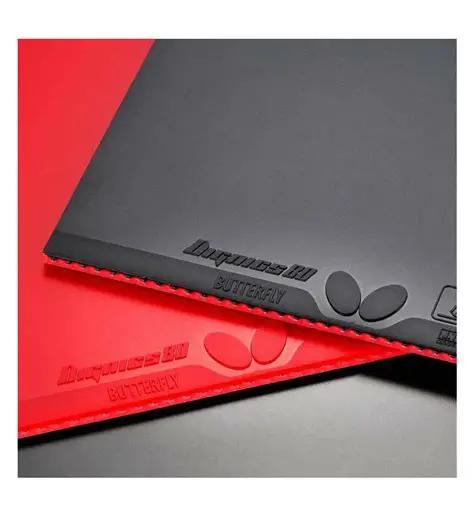
Dignics 80 is the balanced member of Butterfly's Dignics family, combining Spring Sponge X, an abrasion-strengthened topsheet, and No. 180 pimple geometry. It offers more dwell and a softer first impression than Dignics 05, while retaining the stability and output of a hard 40° sponge. The result is a versatile offensive rubber for looping, driving, blocking, and countering from close to the table through mid-distance.
Dignics 80 is for advanced all-round attackers who need one rubber to stay reliable as the rally changes shape. It works especially well on the backhand for players who loop, flick, block, and counter without wanting an extreme low-arc or high-arc identity. It also suits forehand players who find Dignics 05 too specialised but still want a firm, durable premium response. Choose it when versatility, stability, and repeatable quality matter more than maximum tackiness or maximum throw.
Dignics 80 is not a beginner rubber and may be excessive for a player still learning basic timing. Its hard sponge rewards active technique and can feel demanding on passive blocks or late contact, even though it is more balanced than Dignics 05. Choose Rozena for a softer learning curve, Tenergy 80 for a more elastic and accessible all-round response, or Dignics 64 if your game is built around flatter, earlier countering.
Select Rubber Color: *
Please select a rubber color to add to cart
The Dignics 80 decision guide
Dignics 80 is built for the player who wants premium output without committing to one extreme. Its No. 180 geometry balances speed and spin, while Spring Sponge X gives the rubber more dwell and stability than its pace-first reputation suggests. It can loop, drive, block, and counter across several distances, making it one of the most adaptable choices in the Dignics range.
In play
The useful question is not whether Dignics 80 is simply fast or spinny. It is how the rubber behaves in the moments that decide a point.
The added dwell gives you a comfortable window to lift and shape the first loop, while the hard sponge keeps the ball deep once you accelerate. It is more forgiving than Dignics 05 without becoming soft or vague.
D80 keeps enough reserve for high-quality counters, but its balanced release is easier to repeat than a specialist high-arc rubber. It is useful when the rally moves between spin and drive rather than staying in one gear.
Active blocks feel stable and precise when the racket angle is set correctly. The rubber can also soften an incoming ball, but a passive touch still needs discipline because Spring Sponge X is ready to return energy.
Flicks, compact topspin, and counter drives all feel natural, especially on the backhand. D80 is quick enough to pressure early but not so flat that a player loses the ability to open with spin.
The topsheet provides useful grip and the hard sponge keeps the response clean on a firm touch. It is less tacky than Dignics 09C and less automatically lively than Tenergy, so deliberate racket control remains important.
Construction, translated
Balances spin and speed so D80 can move between loop, drive, block, and counter without a strong specialist bias.
Adds elasticity and dwell to a hard sponge, helping both near-table touch and powerful mid-distance strokes.
Improves resistance during high-volume training while preserving the grippy contact needed for topspin and flicks.
Gives more net margin and looping comfort than Dignics 64, but stays more direct and manageable than Dignics 05.
Makes D80 a strong two-winged choice when you want one setup to remain useful across different opponents and rally distances.
Build the racket around it
Dignics 80 works best on a stable offensive blade that lets its balance show. A moderately flexible or inner-carbon blade brings out dwell and touch, while a composed outer-carbon blade adds authority for counters and mid-distance play.
Butterfly Viscaria; Butterfly Timo Boll ALC
Provides a stable platform for D80's mix of loop, drive, block, and counter.
Butterfly Innerforce Layer ALC; Butterfly Fan Zhendong ZLC
Adds dwell and comfort to the hard sponge, especially for opening and backhand play.
Stiga Clipper Wood; Butterfly SK7 Classic
Gives D80 a solid, direct contact for players who want control without moving to a fast outer carbon blade.
Buyer questions
Dignics 05 has a stronger high-arc, high-spin identity and is more specialised for full topspin and counterlooping. Dignics 80 uses the same hard Spring Sponge X family but balances the release more evenly, making it easier to blend looping, driving, blocking, and transition play. Choose D05 for a dedicated spin attack from different distances; choose D80 when your point construction changes often and you want fewer extremes.
Dignics 64 is faster and flatter, favouring early timing, direct drives, and close-table backhand pressure. Dignics 80 has more arc and dwell, giving you a safer opening window and more flexibility when a rally moves away from the table. Choose D64 for a speed-first counter game; choose D80 when you still want direct attacks but need more room for topspin and transition.
Both are balanced, medium-trajectory offensive rubbers, but Dignics 80 has a harder 40° Spring Sponge X and a firmer, more stable response at high impact. Tenergy 80 feels more elastic and accessible, while Dignics 80 gives more authority, durability, and quality when the player supplies speed. Choose T80 for a livelier progression rubber; choose D80 when your technique is advanced enough to use the hard sponge consistently.
Yes. D80 is one of the strongest all-purpose Dignics choices for an active backhand because it supports flicks, topspin, blocks, and counters without becoming as flat as Dignics 64 or as arc-biased as Dignics 05. It still requires clean timing and an intentional racket angle, but its balance makes it useful across more incoming balls. Choose it when your backhand must transition between touch and pressure.
Choose Dignics 80 if you are an advanced two-winged attacker who plays at different distances and does not want to specialise too heavily in one trajectory. It suits players who already generate their own acceleration, want a firm and durable premium rubber, and value repeatable quality in loops, counters, blocks, and drives. It is not a beginner upgrade; Rozena or Tenergy 80 will usually be easier while technique is still developing.