Opening against backspin
The tacky surface gives a deliberate, secure contact for lifting heavy pushes. It rewards brushing with forward acceleration, producing a loaded opening rather than a merely high ball.
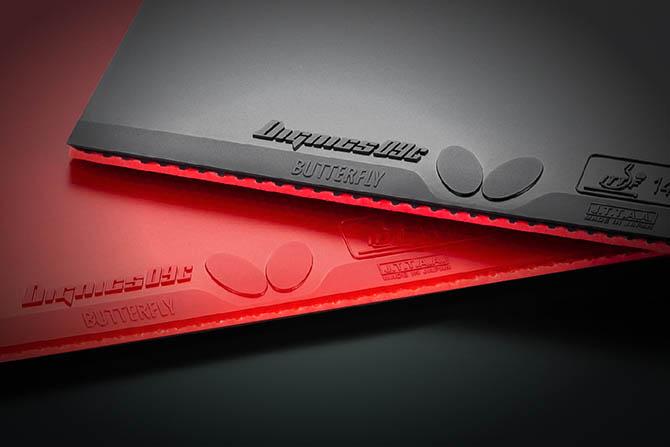
Dignics 09C is Butterfly's high-friction hybrid: a tacky topsheet over a hard 44° Spring Sponge X. Its No. 209 pimple geometry holds the ball for heavy serves, controlled opening loops, and aggressive counter topspin, while the tensioned sponge adds pace once you accelerate. It is a demanding but unusually versatile choice for advanced players who want more grip and short-game control than a conventional tensor without giving up attacking power.
Dignics 09C suits advanced offensive players who want to build points around grip, placement, and heavy rotation. It is especially natural on the forehand for loaded serves, banana flicks, opening against backspin, and counter topspin over the table or from mid-distance. The hard sponge rewards players who generate their own acceleration and can adjust their racket angle to incoming spin. It can work on the backhand for a confident, spin-first player, but its strongest identity is a controlled, forehand-led attack.
Dignics 09C is not the easiest choice for beginners, passive blockers, or players who want effortless speed from a short stroke. Its tackier surface and hard sponge feel more deliberate than Tenergy 05 or Dignics 64, especially when you are late or underpowered. Choose Tenergy 05 for a livelier elastic response, Dignics 64 or 80 for quicker two-winged exchanges, or Rozena if forgiveness matters more than maximum grip.
Select Rubber Color: *
Please select a rubber color to add to cart
The Dignics 09C decision guide
Dignics 09C sits between a traditional tacky forehand rubber and a modern tensioned tensor. The topsheet gives you time and friction to shape the ball, while the hard Spring Sponge X comes alive when you commit to the stroke. That combination makes 09C especially interesting for players who want to control the first attack, then keep enough power for counter topspin.
In play
The useful question is not whether Dignics 09C is simply fast or spinny. It is how the rubber behaves in the moments that decide a point.
The tacky surface gives a deliberate, secure contact for lifting heavy pushes. It rewards brushing with forward acceleration, producing a loaded opening rather than a merely high ball.
Once the sponge is engaged, 09C has more pace than its short-game behavior suggests. It feels composed over the table and can turn a counter into a heavy attacking ball from mid-distance.
The dense sponge gives active blocks a stable, controlled feel. Passive blocking is less automatic than with a livelier tensor, so close the racket and add a little direction against heavy topspin.
This is a major strength: the friction surface helps create heavy serves and controlled short returns. It is less forgiving if your racket angle is loose, but it gives an experienced receiver more ways to keep the ball short.
Banana flicks, spinny flips, and quick opening loops feel secure because the topsheet grips the ball. The payoff comes from an active hand; a passive punch will not reveal the rubber's best gear.
Construction, translated
Holds the ball during brushing contact, helping heavy serves, spin variation, and controlled opening loops.
Balances topspin, defensive play, over-the-table technique, and counter topspin instead of specialising in only one stroke.
Stays calm on delicate contact, then supplies a strong release when you accelerate through the ball.
Offers more grip and short-game authority than a typical non-tacky tensor, with more immediate pace than a traditional tacky rubber.
Can move from controlled serve and receive to full-power attack, but only when the player changes pressure and racket angle deliberately.
Build the racket around it
09C pairs best with a stable offensive blade that gives the hard sponge enough impact to open up without making the short game unpredictable. A balanced outer-carbon blade sharpens its counter game, while inner carbon or a slightly flexible wood blade adds dwell and touch.
Butterfly Timo Boll ALC; Butterfly Viscaria Super ALC
Keeps the hybrid response firm and predictable during active blocks and counter topspin.
Butterfly Innerforce Layer ALC
Adds a softer first contact and extra dwell when opening against backspin.
Butterfly Petr Korbel
Gives 09C more feedback and helps a strong looper feel the ball before the hard sponge releases.
Buyer questions
Tenergy 05 is the more elastic and immediately lively option, with an easier high-arc response for committed topspin on both wings. Dignics 09C has a tackier, denser contact that gives more control over serves, short receive, and deliberate opening loops. 09C asks for more of your own acceleration, but it rewards that effort with heavier grip and a more controlled transition from short play to attack. Choose T05 for elastic versatility; choose 09C for friction, touch, and a forehand-led game.
Both use a hard Spring Sponge X and suit advanced attackers, but their topsheets create different priorities. Dignics 05 is a grippy, non-tacky high-arc tensor that feels more direct and natural in power looping. Dignics 09C is tackier and gives more hold in serves, receive, and spin-first opening play. Choose Dignics 05 for a firmer, cleaner counterlooping rhythm; choose 09C when you want to shape the first ball and generate maximum friction.
Dignics 64 is the faster, more direct choice for close-table countering, compact drives, and a flatter release. Dignics 09C is slower to come alive on a soft touch but offers more grip, serve weight, and control when opening against backspin. D64 is usually the easier backhand for a player who redirects pace early; 09C is the stronger match for a forehand player who wants to create the spin and tempo of the rally.
Dignics 80 is the more balanced Dignics option, blending looping, driving, blocking, and transition play with a medium trajectory. Dignics 09C has a more distinctive friction-led feel: stronger grip in the short game and more deliberate spin production, but greater demands on timing and acceleration. Choose Dignics 80 for a two-winged attacker who wants fewer extremes; choose 09C for a spin specialist who values serve, receive, and heavy forehand opening quality.
It is not an ideal beginner rubber. A strong intermediate player who trains regularly and already controls racket angle, footwork, and topspin contact can use 09C, especially on the forehand, but should expect an adjustment period. The tacky surface and hard sponge do not provide effortless pace on weak strokes. If your technique is still developing, Rozena or a softer tensor is usually a better bridge; move to 09C when you can consistently supply acceleration and want more grip rather than more forgiveness.